
Getting Started
What Is Bitcoin? A Beginner's Guide
Bitcoin explained simply: what it is, how it works, and the risks to know.

Bitcoin (BTC) is a digital currency that runs on a global, decentralized network. No single company or government controls it. This guide explains the basics in plain English — what it is, how it works, why it has value, and the risks.
The simple version
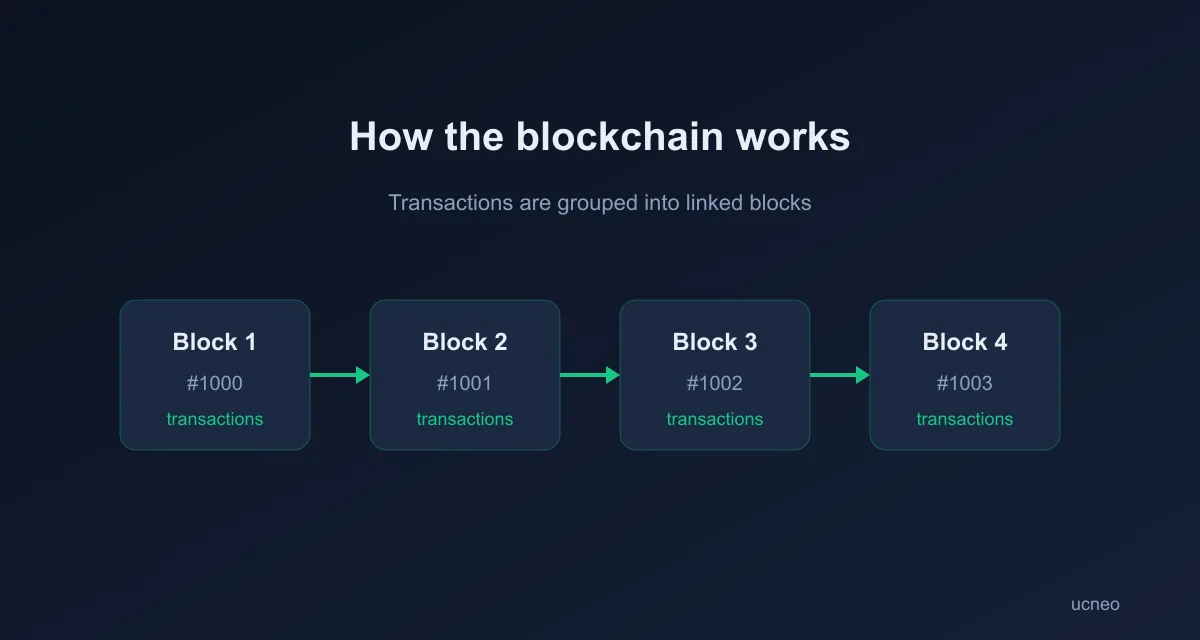
Bitcoin lets people send value over the internet without a bank in the middle. Transactions are grouped into "blocks" and recorded on a shared public ledger called the blockchain, maintained by thousands of computers (nodes) worldwide. Once confirmed, a transaction is extremely hard to reverse or fake.
Why does it have value?
- Scarcity: the supply is capped at 21 million coins — no one can print more.
- Security: the ledger is protected by enormous computing power (mining).
- Decentralization: no single point of control or censorship.
Supporters call it "digital gold." Its price is set purely by supply and demand, so it can be very volatile — large swings up and down are normal.
Key terms in one line each
| Term | Meaning |
|---|---|
| Blockchain | The public ledger of all transactions |
| Wallet | Software/hardware that stores your keys |
| Private key | The secret that controls your coins — never share it |
| Self-custody | You hold the keys yourself, not an exchange |
| Satoshi | The smallest unit (0.00000001 BTC) |
How do you get bitcoin?
Most people buy a small amount on a reputable crypto exchange after identity verification. You can then keep it on the exchange for convenience, or move it to your own wallet for full control. New to exchanges? See our exchange guides.
Key risks
- Volatility: prices can rise or fall sharply.
- Irreversibility: crypto transactions usually cannot be undone.
- Scams & phishing: never share your recovery phrase; ignore "guaranteed returns."
- Self-custody responsibility: lose your keys, lose your coins.
Getting started safely
- Learn the basics (you are doing that now).
- Choose a reputable exchange available in your country.
- Start with a small amount you can afford to lose.
- Turn on 2FA and back up your recovery information.
- Consider self-custody as your holdings grow.
How a Bitcoin transaction actually works
- You sign a transaction with your private key (proof you own the coins).
- It's broadcast to the network and waits in the mempool.
- Miners include it in a block; each new block on top is a "confirmation".
- After a few confirmations, reversing it is practically impossible.
That's why exchanges credit deposits only after N confirmations — they're waiting for finality.
Bitcoin vs traditional money
| Bitcoin | Bank money | |
|---|---|---|
| Issuer | No one (protocol) | Central bank |
| Supply | Capped at 21M | Expandable |
| Settlement | ~minutes-hour, global | Days for cross-border |
| Reversibility | Irreversible | Chargebacks possible |
| Custody | Yours if self-custodied | Always the bank's ledger |
Three myths worth killing early
- "Bitcoin is anonymous." It's pseudonymous — every transaction is public forever; analysis can link addresses to people.
- "It's too late / too expensive." You can buy a tiny fraction; unit price alone is meaningless (see market cap).
- "One exchange collapse kills Bitcoin." Exchanges are businesses; the network itself has run without downtime for over a decade.
FAQ
Is Bitcoin legal? It depends on your country — most allow owning it; some restrict trading. Check local rules. Can I buy less than one Bitcoin? Yes — you can buy a tiny fraction. Is Bitcoin the same as other crypto? No; Bitcoin is one of thousands of coins, each with different designs and risks.
Educational content only. Not financial advice.